How to get more Google reviews for your Ibiza restaurant (and reply in several languages)
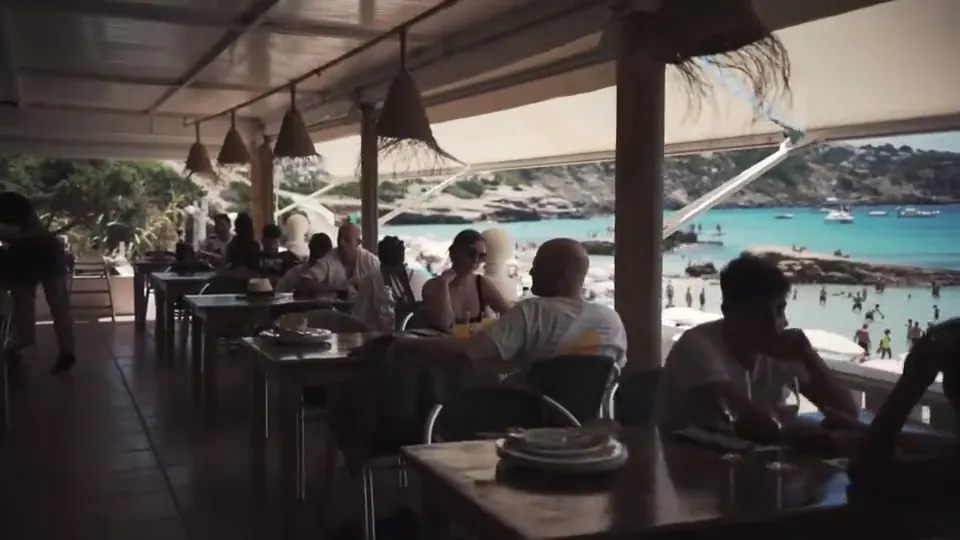
If you run a restaurant on the island, getting more Google reviews for your Ibiza restaurant is less about hacks and more about habit: ask every table, at the right moment, and make leaving a review take ten seconds. Most of your guests are on holiday, searching Google Maps in their own language from a villa or a sunbed, and your rating plus the last few reviews often decide where they book tonight.
This guide covers what Google allows and what it penalises, how to ask without making it awkward, how to reply in each guest's language, and a routine that keeps reviews coming from May to October.
Why reviews decide where visitors eat
Picture how a family from Milan staying in Sant Josep, or a group of friends from Manchester in Sant Antoni, chooses dinner. They open Google Maps, search "seafood near me" or "best paella Ibiza", compare a handful of listings and read the most recent reviews. They have never heard of your chef. They see stars, photos and what people like them wrote last week. On an island where most diners are visitors, reviews work on three fronts:
- Trust: a near-perfect score from a handful of reviews persuades less than a strong score from many recent ones. Guests want to read about this summer, not 2022.
- Language: a German guest pays more attention to a review written by another German, and a reply in German tells them they will be understood when they arrive.
- Visibility: Google says prominence in local results is based partly on how many reviews a business has, and that more reviews and positive ratings can help local ranking. It is not the only factor (our guide to local SEO for Ibiza restaurants covers the rest), but it is one you control.
What Google bans, and what happens if you get caught
Owners arriving from the UK or elsewhere sometimes bring habits that are common back home but break Google's rules. Google Maps' content policy treats any review paid for, directly or in kind, as fake engagement and removes it. In practice:
| Practice | Allowed? | Why |
|---|---|---|
| Asking every guest for an honest review, with a link or QR code | Yes | It is exactly what Google suggests in its tips for getting reviews. |
| A free drink, a discount or a prize draw in exchange for a review | No | Offering payment, discounts or free goods and services in exchange for any review is prohibited. |
| Only asking happy tables, or sending unhappy guests to a private feedback form instead | No | Google bans discouraging negative reviews and selectively soliciting positive ones (often called review gating). |
| Staff, family or suppliers reviewing the restaurant | No | Conflict of interest, which includes current or former employment and contractual relationships. |
| Offering something to change or remove a bad review | No | Google treats it as fake and misleading content, just like an incentive. |
| Replying to every review, including the bad ones | Yes | Replies are public and Google encourages them. |
The penalties are real. For fake engagement, Google can stop your profile receiving new reviews for a set period, unpublish your existing reviews for a set period and show a warning telling people that fake reviews were removed. Losing your reviews in August would cost far more than any free shot ever earned.
How to ask for reviews without the awkwardness
Most happy guests never leave a review simply because nobody asked, or because finding your listing feels like effort. Fix both:
- Timing: ask with the bill or the coffee, once the experience is complete. Earlier feels pushy; the next morning, they are thinking about the boat trip.
- Link or QR code: from your Business Profile you can share a link or QR code that opens the review form directly. Print it on the bill, a table card or your digital menu. Grow Ibiza also supplies NFC and QR cards that open your Google review form straight away: guests tap their phone and start typing, no searching for your name.
- After a booking: if the table was booked on WhatsApp or online, a short message the next day with the link works well with visitors who are still on the island.
- Google accounts: reviewers need a Google Account, which can be created with a non-Gmail address. Useful to know when someone says they "can't".
Ibiza teams change every season, so write the request down rather than relying on the manager's memory. One line per language, along the lines of "Would you mind leaving us an honest review on Google? It really helps a small restaurant", and never ask for "five stars".
- Review link and QR code generated from your Business Profile and tested on two phones.
- QR code or NFC card on the bill, the table or the bar.
- Request line written out in English, Spanish, Italian, German and French for the team.
- Post-visit WhatsApp template with the link and nothing offered in return.
- A 15-minute briefing for seasonal staff in May: ask everyone, and never offer anything.
Replying to reviews in several languages
Replies are public. You are writing for the next guest as much as for the reviewer. Google's own advice: be polite and professional, keep it short, avoid pasting the same generic thank-you everywhere, do not use replies for deals or promotions, address the reviewer by name and sign off with your name or initials.
The rule that pays off most in Ibiza: reply in the language the review was written in. Italian review, Italian reply. A Dutch guest writing in English gets English. Machine translation is fine for a first draft, but have someone fluent check dish names, place names and tone. At Can Yucas, for example, we handle content and answer the restaurant's Google reviews in four languages. The approach that works is a phrase bank per language, checked before the season, which you then personalise for every reply.
A good reply has three parts: thank them for something specific they mentioned, add one detail useful to future readers (the fish comes in daily, book two days ahead for sunset), and sign off.
"Thank you, James. So glad the red prawns were the highlight. If you're back next summer, book a couple of days ahead for a sunset table. Best wishes, Marta (front of house)."
If your website does not speak your guests' languages either, your listing is doing all the work alone. Our guide to multilingual websites for Ibiza hotels and restaurants explains which languages to add based on your own data.
Handling negative reviews, and when to report them
A bad review in high season stings, but Google itself notes that a mix of positive and negative feedback can look more trustworthy than a wall of five stars. What matters is the reply:
- Reply promptly but calmly, never straight after a busy service.
- Acknowledge genuine mistakes and apologise where appropriate; explain what you can and cannot do.
- Never share private details about the guest or get personal.
- Take it offline: invite them to contact you by phone or email to sort it out.
If a review breaks the policies (no real visit, posted by a competitor, abusive or off-topic) you can flag it from your profile. And if someone threatens you with bad reviews unless you pay, do not pay: Google has a dedicated process for reporting review extortion.
A review routine for the whole season
Reviews reward consistency, not one-off pushes. The calendar we suggest to restaurants and beach bars on the island:
- March and April: check your profile (hours, photos, menu), generate the link and QR code, print cards and prepare the phrase bank.
- May: brief the seasonal team and switch on the post-visit WhatsApp message.
- June to September: ask every table, reply daily and log repeated complaints so the kitchen or floor can fix them.
- October: thank guests for the season in your replies, update winter hours and check which languages grew.
If you would rather have someone run this alongside your listing, content and ads, our restaurant and beach club marketing in Ibiza page explains how we work with each venue.
Frequently asked questions
Can I offer a free drink or discount for a Google review?
No. Google's policy bans offering payment, discounts or free goods and services in exchange for any review, positive or negative, and for changing or removing a bad one. If it detects this, it can block new reviews, unpublish existing ones and show a warning on your profile.
How do I get a QR code for Google reviews?
From your Google Business Profile you can share a link or QR code that opens your review form directly. Test it on a couple of phones before printing, then put it on the bill, a table card or a post-visit WhatsApp message.
Which language should I reply to reviews in?
The language the review was written in. Replies are public, so future guests from the same country will read them. Use machine translation as a draft if needed, but have someone fluent check dish names, place names and tone.
Is it allowed to ask only happy customers for reviews?
No. Google prohibits selectively soliciting positive reviews and discouraging negative ones. Ask every guest for an honest review and deal with complaints openly, both in person and in your replies.
Sources
Want full tables outside August too?
We'll give you a free strategy analysis of your business and tell you honestly what we would do, no obligation.